
“The images used are for purely illustrative and decorative purposes. They are not intended to represent factual reality nor to offend the integrity of persons, places or events.”
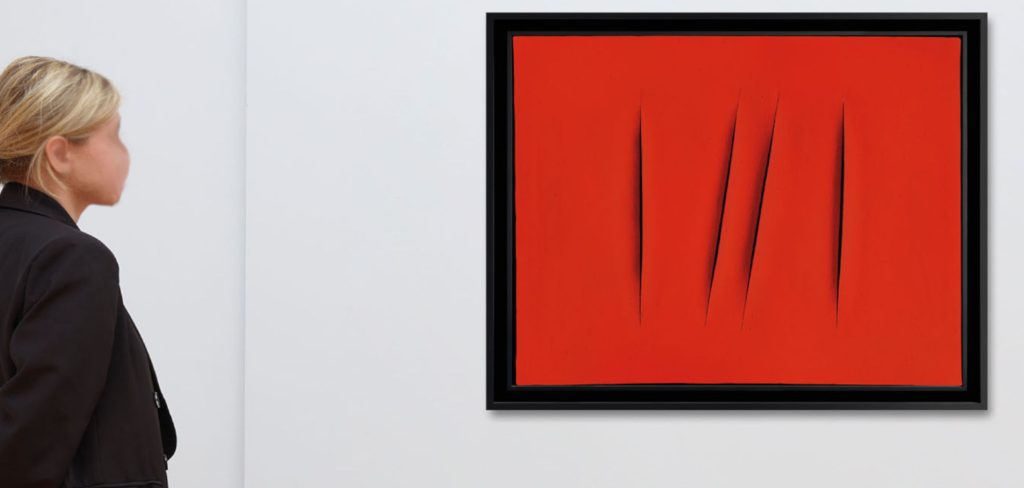
Adaptation of a fairy tale by Hans Christian Andersen, rewritten by Enrico Ibrahim Deiana (from the book "The Great Cultural Battle")
Many years ago, there lived an Emperor who loved to surround himself with beautiful new works of art, to the point of using a large portion of the Kingdom’s economic resources to fund artists who created new artistic projects for him. He could hardly have anticipated that a complex chain of events, naively set in motion by himself, would slowly drive the entire population of his beloved city to madness, causing the decline of a Kingdom once so rich and flourishing. The Emperor was universally regarded as a philanthropist and a lover of arts and culture; he paid little attention to his soldiers’ armaments, as the Kingdom had enjoyed centuries of absolute peace, nor did he care to attend noble festivities, having no interest in indulging in drunkenness or reveling in luxury, nor in strolling idly through the city center to flaunt his garments and regal lifestyle.
What truly mattered to him was discussing, with everyone, the new paintings he acquired: with visitors to the castle, for instance, with his humble subjects, with the wealthy figures of the Kingdom, or with pilgrims who knew the Kingdom’s arts only by reputation and came specifically to admire them.
Everyone appreciated his discourses on such profound topics; the Emperor was obsessed with his goal of making his Kingdom ever more beautiful and rich in works of art, which sometimes made him naive and gullible. The Emperor, unique in the world for his record, possessed so many works of art that scarcely a centimeter of the castle walls could be seen behind them; when people asked where he was, instead of saying, “The King is now in a meeting with the Council” it was always said of him: “He is in the new artist’s studio, admiring the latest works of art!”
In the great city he governed, people enjoyed themselves greatly, and the economy, fueled by culture, thrived. This era was truly the pinnacle of civilization; the arts and culture had inspired the hearts of its citizens, who were shaped by lofty ideals and goals, each contributing to making the Kingdom more beautiful and increasingly efficient. Every day, many foreign artists or simple art enthusiasts arrived… but one day, unfortunately, an unforeseen event occurred. Eager for quick profits and aware of certain weaknesses of the Emperor, two impostors arrived; driven by a thirst to profit from the goodness and innocence of this prosperous civilization, they passed themselves off as great artistic geniuses and claimed they could create the most magnificent works of art ever conceived by the human mind.
According to them, not only would the colors and designs be extraordinarily beautiful, surpassing the self-imposed limits of artistic tradition, which relied on academic rules and canons they deemed merely useless and detrimental to creativity… but they even claimed to be capable of defying the laws of physics, shaking up all these rules and the now stale concepts of dull, traditional aesthetic pleasure, so outdated.
The artworks created by these two scoundrels, it was said, went beyond the visual and had the strange power of being invisible only to men of low education or those unworthy of their institutional role or trade.
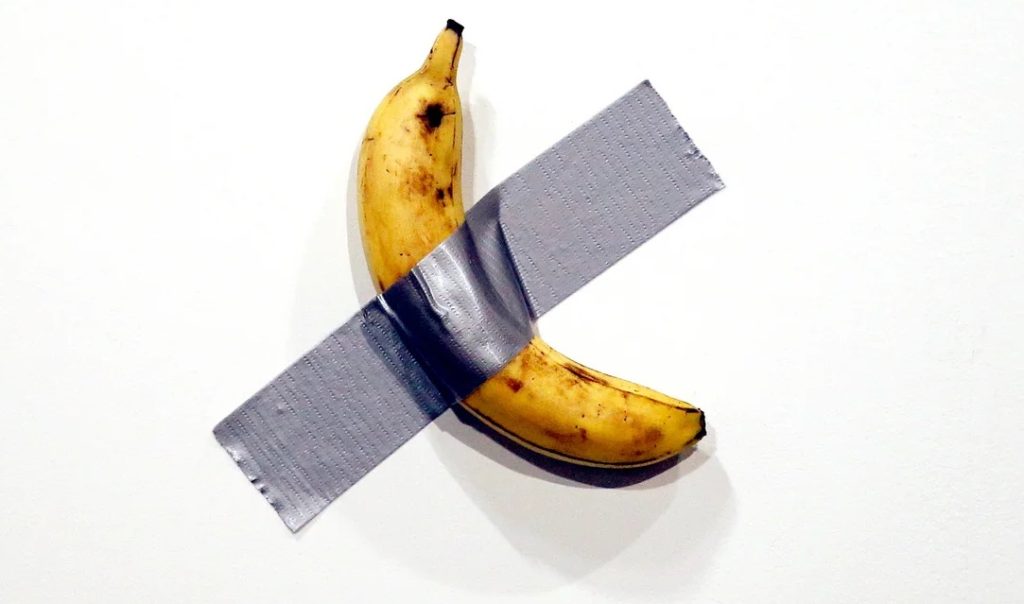
“They are truly great artists; they speak of revolutionary concepts never heard before!” the Emperor thought to himself in ecstatic. “And with them by my side, I could discover who in my Kingdom is unfit for their role and distinguish the foolish from the intelligent. Yes, these works of art must be created for me immediately! They would improve the Kingdom’s efficiency and allow art to take a further leap forward.” Thus, he gave the two swindlers a vast amount of money to create the works to the best of their ability; it was an enormous, good-faith investment so they could begin working at once. Having never heard of such an artistic endeavor before, he funded it as he had never funded anyone else, in his kindness and naivety.
The two borrowed a grand hall in the castle and set up a multitude of easels, pretending to work on a large number of empty frames to which they had attached no canvas. Unscrupulously and with great greed, they demanded in advance the most precious pigments and the highest quality canvases; they secretly filled their bags and suitcases with these materials, then worked on the empty easels until late at night, covertly reselling the materials acquired through deceit.
“I would like to know how the paintings are coming along”, thought the Emperor, who, in truth, felt somewhat anxious at the idea that fools or those unfit for their roles could not see the works he had commissioned. Naturally, he had no fears for himself, as he was the Emperor and trusted that most of his subjects were perfectly educated; thus, he sent a trusted aide to check on the progress of the work, confident in his professionalism and intelligence.
Word spread, and everyone in the city had now heard of the extraordinary power of those paintings and was, in fact, very eager to find out how ignorant and incompetent their neighbor might be; discord was metaphorically sown. “Tomorrow, I will send my good old minister to those two great painters” thought the Emperor, “He will surely be able to see better than others how the work is progressing, as he has good sense, excellent cultural education, and there is no one better than him at his trade.” The next day, the old minister entered the studio where the two swindlers were working on a multitude of empty easels, but things did not go as expected!
“God protect me!” he thought, his eyes widening. “I can’t see anything!” But he did not say it, for fear of being judged. Both swindlers, aware of his thoughts, urged him to come closer and asked if the colors and design weren’t magnificent. They pointed to the empty easels, and the poor minister, continuing to stare wide-eyed, could say nothing, for there was nothing to see, so he nodded nervously as beads of sweat formed on his forehead… “Oh my Lord!” he thought. “Am I foolish? I never thought so, but you never know. Perhaps I’m not fit for my role? I cannot admit that I can’t see the canvases! I would lose my job and be ridiculed by all.”
“Well? You say nothing? What do you think of the concept we’ve depicted, of this art that transcends art, that surpasses the constraints of the past? Don’t you see how revolutionary it all is?” exclaimed one of the false painters. The other swindler added, egging him on: “We create art that only the most cultured and sophisticated can understand; we are delighted that you are here to admire our work.

The old minister, peering through his glasses in pure panic that he tried to mask, said while sweating profusely from nervousness: “It’s splendid art! Beautiful! What drawings and colors! Yes, yes, I’ll tell the Emperor I like them immensely! What conceptual research, what avant-garde art! Just as you say, yes, yes! Tell me more!”
“We’re very pleased! It’s clear you’re a connoisseur”, said one of the two painters, and they immediately began pointing out the various colors and splendid designs, as well as explaining the intrinsic conceptualism of the work, which permeated every gesture.
The old minister listened carefully to parrot the same explanation back to the Emperor, and so he did, repeating everything verbatim, though he had understood nothing at all. The swindlers seized the opportunity and immediately requested another large sum of money, precious pigments, and various materials needed to complete the works; they then began privately receiving high-ranking officials who had always been somewhat jealous of the Emperor and desired greater decision-making power in the Kingdom’s administration; several banknotes changed hands during those meetings.
Through the advance signing of several very private contracts, they secured the right to exhibit their “masterpieces” in the most important local museums and galleries, naturally offering substantial profit percentages to the owners. They requested to be included in the future as contemporary artists in the official records of art history, described as great innovators to be studied in major educational institutions.
With much of the money obtained, they also hired art critics, purchased shares in art galleries and museums and secured prestigious positions in roles of significant cultural influence. These two swindlers seemed never to rest, organizing everything and more in such a short time; they had been planning this scheme for years, even though they appeared suddenly as foreigners new to the Kingdom, and they followed a precise action plan, connecting with individuals with whom they had already established relationships in previous years.
Meanwhile, they never added anything to the empty frames… but continued to pretend to paint in the air, holding empty palettes devoid of colors. The Emperor was brimming with curiosity, kind and naive as he was; he was so well-intentioned that he would fund anyone who promised to create art and culture useful to the prosperity of his Kingdom; this was his greatest weakness!
After a month, trembling with anticipation, the Emperor sent another honest official to check on the progress of the work and, let’s say, to test his professionalism a bit, asking how much longer it would be before the paintings were ready.
The new official experienced the same thing as the previous minister; he carefully examined the easels, but since there was nothing to see except empty frames, he saw nothing.
“Aren’t these paintings grand and revolutionary?” asked the two swindlers, explaining and showing the invisible art that wasn’t there at all before anyone’s eyes, while smiling so positively and charmingly at the poor official.
“I’m not foolish”, thought the official… “Is it then that the role I hold is not suited to me? That seems strange! Regardless, no one must notice, I must play along and pretend to see the works, or I’ll be sacked and ridiculed!” And so, he lavishly praised the artworks he couldn’t see and vividly described the joy that the colors and magnificent designs brought to his gaze.
He wasted no time and repeated to the swindlers the explanation he had heard from the minister. “Yes, they are truly magnificent, an art that surpasses the past, goes beyond tradition, and is revolutionary!” he then reported to the Emperor, repeating every new description deliberately crafted by the two swindlers, who well understood the psychology of human emulation in moments of panic.

Everyone in the city was talking about those revolutionary artists, who had now gained a prominent role in cultural influence and had already begun to propagate their innovative style in theoretical lectures, mocking previous artistic styles, organizing reading sessions and awareness meetings about the new artistic concepts while stigmatizing the old methods.
Theoretical lectures and conferences, yet no works displayed; their dialectical talent alone was enough to enchant the Kingdom’s intellectuals, who fell for it hook, line, and sinker.
Two more months passed, and by now these two artists had conquered the minds of everyone with cultural influence in the Kingdom; the Emperor himself now wished to see the famous works in person, while they were still in the studio, before they were exhibited to the public. Being a perfectionist, he wanted to see the works only when they lacked the final touches, never before, despite his immense curiosity and his struggle against his own desire to see them. Accompanied by a group of chosen men, including the two officials who had already seen them months earlier, he went to the cunning swindlers who were painting with apparent great effort, but in the air.
“Aren’t they outrageously artistic?” exclaimed the two loyal officials who had learned to pretend to see the works. “Your Majesty, look at the drawings, the colors, the composition, the profound and revolutionary existential concept!” And they pointed to the empty frames, thinking others could see the works that no one actually saw, with fake smiles they had learned to display when needed.
A deathly silence…
The Emperor nearly fainted, almost suffering a heart attack, but with all his mind and effort, he managed to mask the terror he felt inside; waves of profuse sweat soaked his regal garments. “What’s this! I feel like I’m dying, this is a nightmare, the worst day of my life” thought the Emperor. “I see nothing! It’s terrible! Am I foolish? How could that be? Or am I unworthy of being Emperor? This is the most terrible thing that could ever happen to me. I must hide it from everyone! My Kingdom would collapse if they found out I can’t see the works.” Then, after a deep breath, accustomed as he was to situations of extreme formality, he exclaimed: “Oh, I am pleased with your work!” he said. “You have my full approval!” while pretending to smile, feigning to observe the invisible works, though bitterness and sadness shone through his eyes; he tried to maintain his regal composure, which in this case saved him from being exposed; he couldn’t admit that he saw absolutely nothing, or he would be dethroned and his Kingdom would collapse, a thought that worried him immensely, like a dagger to his heart. His entire entourage looked closely, saw nothing either, but all pretended nervously.
This was the worst day of the Emperor’s life, and from that day, he withdrew into himself, losing all love for the arts and culture; he became depressed and no longer wished to fund young artists, who now seemed obsessed with this new style. He decided instead to delegate the two swindlers to oversee such administrative tasks, feeling incapable of understanding the future of art and utterly inadequate for these challenging modern times.
At this moment, the Kingdom began to crumble internally; a wave of depression swept over, especially among lovers of art and culture, but everyone masked it to avoid being judged; no one in the Emperor’s court ever saw any work, but none had the courage to admit it; all, to avoid being labeled as ignorant, flattered the Emperor for funding these two great artists and parroted: “They’re phenomenal, revolutionary works! They surpass the art of the past, going beyond all our previous preconceptions!” And to avoid appearing unable to see the works, they praised them excessively. They also advised the Emperor to immediately inaugurate the exhibition in the central square, outdoors, for all the Kingdom’s citizens! This would show the subjects how capable the Emperor was of such philanthropy; the forced fake smiles, the unbalanced compensations of feigned interest were palpable, but everyone was focused on deceiving the next person, and the spirits of the Kingdom were all emotionally shattered. No one could trust their own eyes anymore and began to doubt themselves and their abilities; the very perception of reality lost its objectivity.
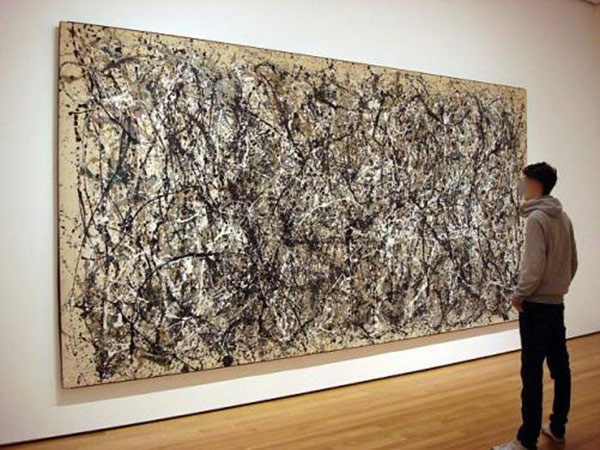
The Emperor, to compensate for his inability to see the works, went overboard by bestowing upon the swindlers even decorative insignias and public offices: an Honorem Pyramid of Grand Master to wear on their lapels, the design and title of which were crafted directly by the two swindlers, along with the title of “Administrators of the Kingdom’s Culture”.
Having done this, he couldn’t wait to retreat to his private chambers and avoid any future art events or social contact; the two swindlers were elevated to geniuses, showered with gifts, roles and titles. They had now become the new overseers of the Kingdom’s cultural enhancement and nothing seemed capable of stopping them.
The night before the exhibition, the swindlers stayed up with several peculiar multi-branched candelabras brightly lit, so that people could see how diligently they were working to complete the numerous works created.
They pretended to apply the final brushstrokes, feigned applying a final varnish, framed the canvas with a clearly visible frame, added their invisible signatures and finally announced: “Now the paintings are ready! We would be honored to receive the blessing and good wishes of the wisest among the wise, our Emperor”.
Aware of the Emperor’s emotional state, they wanted to twist the knife in the wound to deliver a final personal humiliation, which would make him even sadder and more insecure about his artistic competence.
The morale of the Kingdom’s authorities and cultural figures was, in fact, at an all-time low, masked by the grandest false and forced smiles in the history of their soon-to-be no longer prosperous and healthy civilization; not only had the Emperor been deeply affected by this situation, but so had most of the hierarchy… and soon the Kingdom’s inhabitants as well.
To give his good wishes before the official exhibition, as requested by the swindlers, the Emperor arrived in person with his illustrious knights and his guards; the two swindlers raised their arms as if holding something in their hands and said: “This is a portrait we created for you; note how lifelike yet revolutionary it is; may it mark the break with dull tradition and the start of a new era! It’s all for you, most illustrious, benevolent, and wisest among men, our wise Emperor”.
“Superb work”, nervously confirmed all the knights in unison, though they could see nothing, as there was nothing to see. Their armor trembled with fear, drenched in nervous sweat. The Emperor, honest and naive, truly believed he was unworthy and had only one thought: to disappear forever and never be seen again; the two swindlers sensed this and decided to make the public aware that they would be the new overseers of culture.
“Would His Imperial Majesty inform the Kingdom’s citizens of our humble assistance as your new administrators of culture, as official promoters of progressive art? We would be delighted to assist His Majesty in fostering the new revolutionary arts”, the swindlers said in unison before all the Emperor’s aides.
The Emperor, utterly demoralized, consented and publicly signed various papers and contracts the swindlers handed him; terrified of revealing his supposed ignorance, he walked trembling toward the exhibition’s inauguration for the public, head bowed.
And so, the Emperor gave the inaugural speech before the people, a completely silent and lifeless crowd; it felt like a funeral, as everyone suddenly felt foolish and incapable of seeing the works, though they hid it.
The Emperor’s speech was prompted by the two false artists standing behind him, who increasingly intervened to add vitality to the Imperial address, extolling the beauty and novelty of the commissioned artworks and speaking over him.
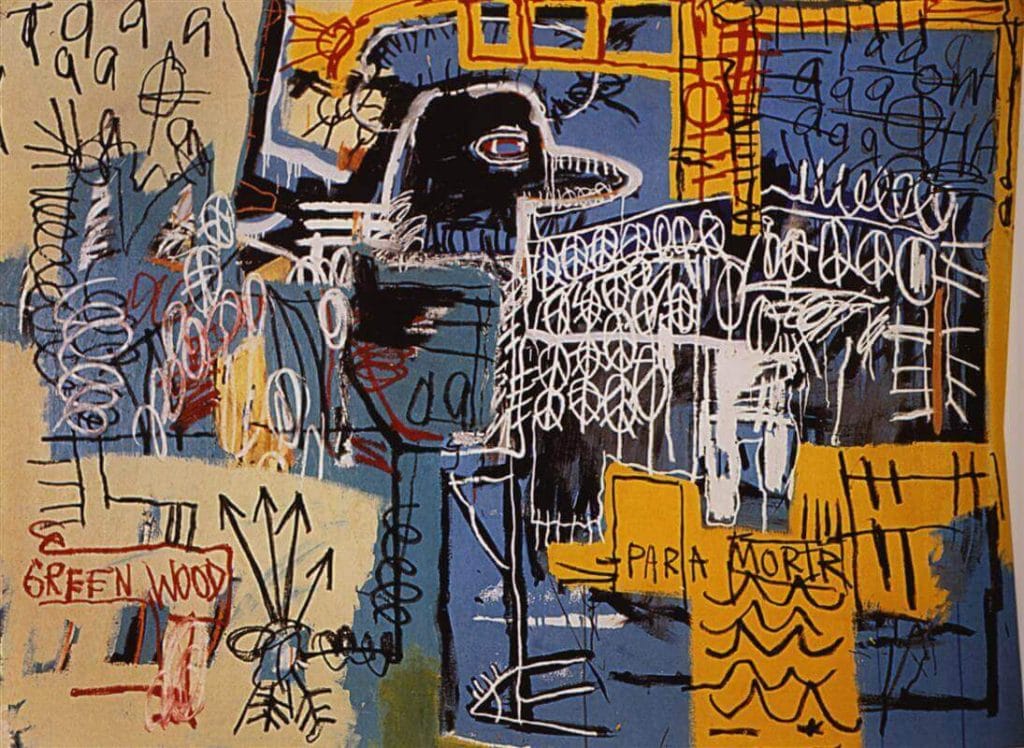
The most foolish townsfolk, terrified of appearing ignorant, were the first to shout “How marvelous the Emperor’s new paintings are! What splendid works of art! Anyone who can’t see them is a fool!”
No one wanted to admit they saw absolutely nothing, for that would prove they were foolish in the eyes of the masses.
None of the Emperor’s commissioned works had ever enjoyed such success as on that particular day, purely due to behavioral overcompensation. Several artists, until then widely respected, grew despondent, saddened by their inability to see the important works, while others, the less talented, began to consider imitating the style of the two geniuses to finally gain appreciation from the local community.
That day, the heart of the Kingdom broke; art lovers sank into depression, while the less talented saw this new art as an answer to their artistic shortcomings and a previously unimaginable career opportunity.
All of a sudden, a cry, the voice of Truth rang out: “There are no paintings, they’re empty frames! Have you all gone mad???” shouted a renowned and beloved master artist, indignant; one of the Kingdom’s finest, it should be noted: “There’s absolutely nothing on those frames! Show some courage instead of pretending to see what doesn’t even exist! It’s a scam!!!” he added.
A loud, uncomfortable silence filled the air, followed by a sudden chorus of murmurs and whispers; the two swindlers, red-faced and furious, pointed at the master artist with utmost hatred.
They jabbed their fingers at him, and one shouted: “Racist, jealous and ignorant! We all know you’re just envious of our talent, you filthy, ignorant racist! You’re only jealous because we’re trying to improve society instead of creating boring repetitions of the past! You’re just a failure, and you know it! Plus, you treat us this way because we’re foreigners! Racist! Shame on you, extremist! The truth is you can’t see the artworks, and you should be sacked for incompetence and stupidity!”
They added, “People! Here he is, this man is the epitome of the rotten past we must overcome. Anyone who thinks like him should be ashamed and he should be fired for incompetence and lack of art education. Who among you, smarter than him, wants his job? Let’s do it!!! Let’s vote on whether to fire him so someone more worthy can take his position!”
The less talented artists, long jealous of the master, seized the opportunity and backed the swindlers’ words, having already secretly agreed with them, as the swindlers had been looking for accomplices for this new art; the same was done by the gallery owners and museum directors they had already struck deals with, who stood to earn a handsome sum by trading and promoting this new art.
The crowd grew agitated, whispers turned to fear, and fear triumphed over truth; instead of siding with the honest master, they shouted against him and voted not only to fire him but to permanently exile him from the Kingdom.
The next day, the news appeared in the papers, labeled as a “Shameful attempt at violent protest, led by an ‘artist’ guilty of corruption and numerous horrific scandals – The true face of the art of the past”; the master was ridiculed and mocked as a violent political extremist, against societal progress and racist, as if his criticism of the fake artists, who happened to be foreigners, was the issue…
The newspapers published entirely fabricated stories accusing the master of nonexistent sexual scandals and corruption; paid false witnesses, in collusion, piled accusations on the poor master.
The media humiliation buried him completely, and he was exiled amid the crowd’s desperate, tearful shouts of hysterical joy.
From that day, no one dared criticize the famous artists’ works for fear of being ridiculed in the local media. Thus, from a simple scam, the art of the two cunning opportunists became the official artistic style, and even today, in that city, they “paint” in that manner.
The moral and sociological consequences will be disastrous for the Kingdom and we will learn about them in the second part of the tale, seen from an unexpected perspective involving a child prodigy and a magical talking golden thread. I’ll give you a small, unknown detail about the swindlers: lies, in the end, are always exposed!
End of Part One.
Intellectual property of Enrico Ibrahim Deiana, from the book “The Great Cultural Battle”.
Scan the QR code to donate:


For donations, contributions, collaborations, purchases, and events, use the form below.