The depth of tradition, the urgency of the present
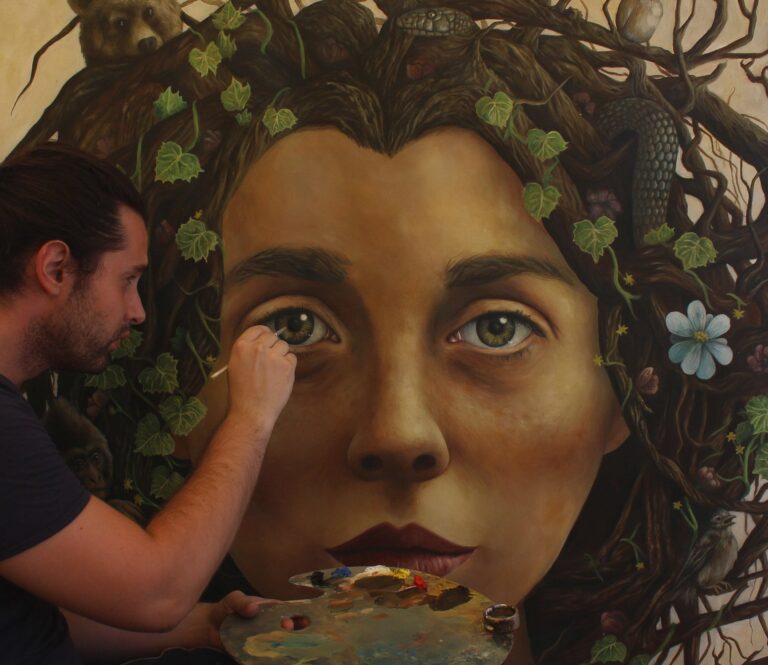
Enrico Ibrahim Deiana at work, while painting "Nature", oil on canvas
Enrico Ibrahim Deiana (Nuoro, 1993) is a contemporary figurative artist trained at the Accademia di Belle Arti in Florence, where he obtained his degree in Painting and Visual Arts and subsequently specialized in the Design and Curation of Artistic Installations.
His training is deeply rooted in the study of academic drawing, artistic anatomy, composition, and the painterly techniques of the European tradition. During his years in Florence, he deepened his engagement with the Western artistic heritage, developing a particular sensitivity toward the human figure, symbolism, and the narrative dimension of the image.
Alongside his painterly practice, he has cultivated a constant interest in art history, aesthetics, and the relationship between art and culture, orienting his research toward a synthesis between classical legacy and contemporary sensibility.
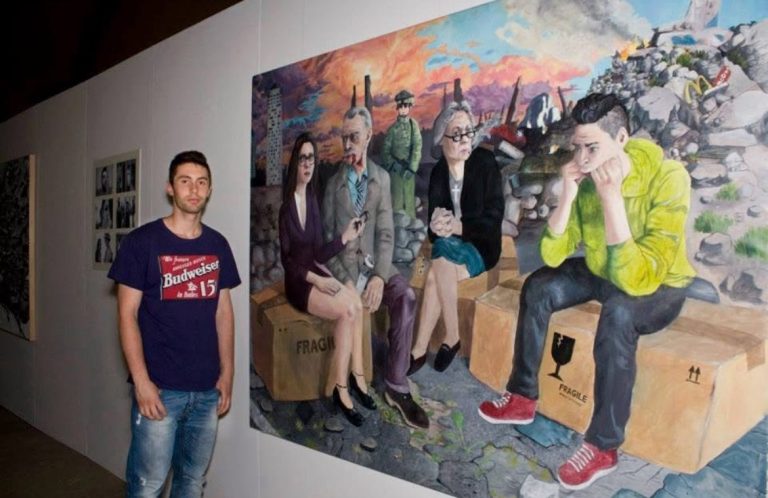
Enrico Ibrahim Deiana in front of his painting "Post-Apocalypse" at Palazzo Medici Riccardi, Florence. 2012
During his years in Florence, he had the opportunity to engage with artists and students from international cultural backgrounds, an experience that contributed to the development of a sensibility open to dialogue between different cultural heritages. Alongside this, he deepened his study of the masters of the Western tradition and the principal currents of modern art, maturing a research oriented toward a synthesis between historical legacy and contemporary sensibility.
Throughout his professional career, he has taught drawing and figurative arts to students from diverse cultural backgrounds, combining his artistic production with a constant commitment to the transmission of technical skills and the fundamental principles of figurative representation.
His artistic production focuses on the great themes of the human condition: identity, memory, transcendence, conflict, hope, and transformation. Through a technically rigorous and conceptually layered figurative painting, Deiana constructs images that invite the viewer to both an emotional and symbolic reading, creating a dialogue between individual experience and universal dimension.
His works are distinguished by the fusion of technical tradition, philosophical inquiry, and contemporary sensibility, proposing a personal vision capable of establishing a bridge between past and present. His research continues to develop through a constant reflection on the role of art as a cultural language and as an instrument for the exploration of human experience.
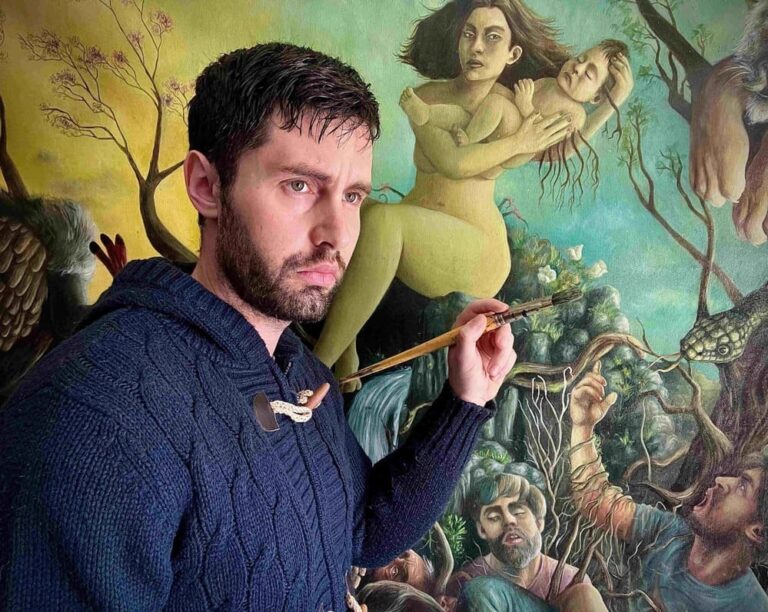
Enrico Ibrahim Deiana in front of his painting "The Rebellion of Nature"