
“The images used are for purely illustrative and decorative purposes. They are not intended to represent factual reality nor to offend the integrity of persons, places or events.”
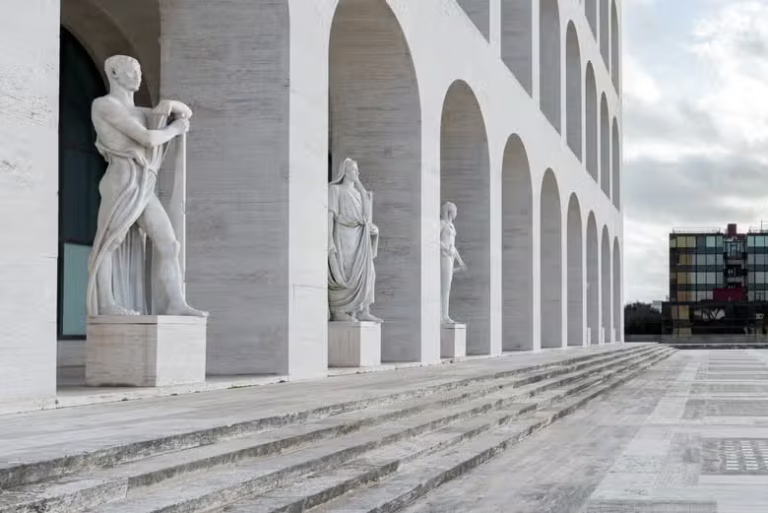
Can the Fine Arts once again become the guardians of our culture and save the West from disaster?
The answer is simple: Yes.
For the safeguarding of Western society, it is now necessary to rediscover classical art and all its interconnections, ignoring the Dadaist influence of the last century, which imposes relativism in the qualitative “judgment” of artworks.
In my book “The Great Cultural Battle”, I show how modern arts seized cultural influence and destroyed the academic concept of the “Fine Arts“, establishing the so-called “Dictatorship of Relativism” through a process of social engineering conveyed by mass culture and artistic products that are no longer beneficial to the individual.
It is absolutely necessary to delve into the history of art and general history of the last century to gain knowledge that can immunize us against this paradoxical strangeness of “everything is art” and “truth is subjective”; to do this, one must also understand what art was before the Dadaist Revolution of 1916, a cultural movement that swept through the West, completely overturning every ethical-moral value, leading through a chain of events to the degradation of Western society.
We must remember who we truly are, regaining awareness of our lost roots to understand contemporaneity in its entirety and the great deception in which we nowadays live; for a figurative artist, the best method to understand what we no longer are, would be to compare their own artworks with those created by the old masters and strive to slowly approach their technical and expressive level, without becoming discouraged but acting with positivity; the same applies to an individual who wishes to understand the present, comparing its current fruits with the wonders of the past.
One will wonder, first innocently and naively, then with a hint of astonishment, why art today is so bizarre… to dispel the doubt, one will study it historically, yet find no rationality in the justifications of art critics who exalt it as if it were “progress” compared to the past, while it physically appears as senseless mixtures of pigments (leveraging the theory of the conceptuality of art, which goes beyond the visual).
One will wonder why the true Fine Arts are no longer taught in schools, and the answer will act as a catalyst for a profound process of inner change that will open the door to new interpretations of reality previously unimaginable, if one has intellectual honesty and the patience to delve deeper.
Those who wish to understand how genuine and authentic modern arts are could compare them with the works created during the period from the classical era of Ancient Greece to the French Academicism of the 1800s; they will thus notice a strange shift in direction that occurred in the mid-1800s with the Impressionist movement, which then, in the 1900s, completely severed any logical connection with the glorious past; it will then become evident how this artistic ideology branched out into various cultural fields (such as literature, music, philosophy) and one will wonder at this point who benefited economically and politically, given that it had only negative consequences on culture and the social fabric.
When one begins to judge the surrounding reality with classical and academic standards, the perspective of the modern world will start to appear very different from what the dominant narrative proposes; we will likely begin to notice a sense of pathetic sadness in the ridiculous cultural works of the present and feel a desire to see those times come back to life.
The academic method of the Pre-Dadaist era was such an elaborate and advanced technical tool that it allowed the visual arts to reach levels never achieved before and even today difficult to imitate; it drew its knowledge from the direct study of reality (mimesis), which was then added to the visual heritage acquired over centuries by individual artists, achieving a perfect balance between realism and the Hellenistic visual beauty; beyond this, it was a great vehicle for knowledge, morality and culture, positively influencing every social sphere.
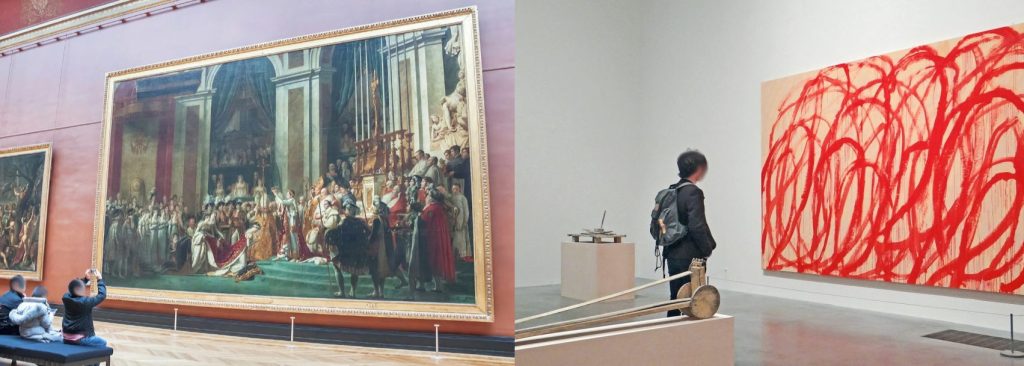
THE HIDDEN AND BURIED ART FROM THE MASSES
Great artists, especially during the period that in art history books is unjustly dominated solely by Impressionism and Expressionism, reached the pinnacle of figurative technique and produced extraordinary masterpieces of eternal beauty; this is an almost erased art history, known only to experts in the field, but hidden from the masses who have been convinced that Van Gogh (1853-1890) was the greatest genius of the 19th century.
We all know the great master Jacques Louis David (1748-1825), as well as the subsequent Jean-Auguste-Dominique Ingres (1780-1867)… but was there no one else as capable as they were? From the way art history is falsely presented, it seems that after Neoclassicism and Romanticism, all artists became Impressionists, and everything else was buried underground, deemed outdated by this innovative artistic movement.
Perhaps, instead, we should give due respect to great Masters such as:
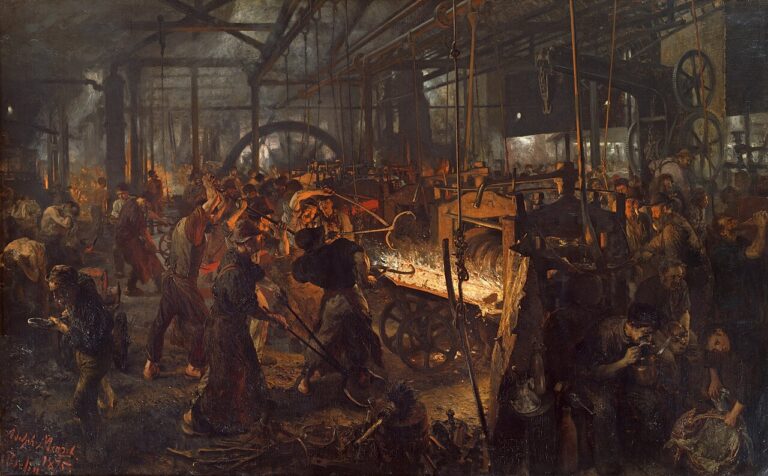
- Adolph von Menzel (1815-1905)
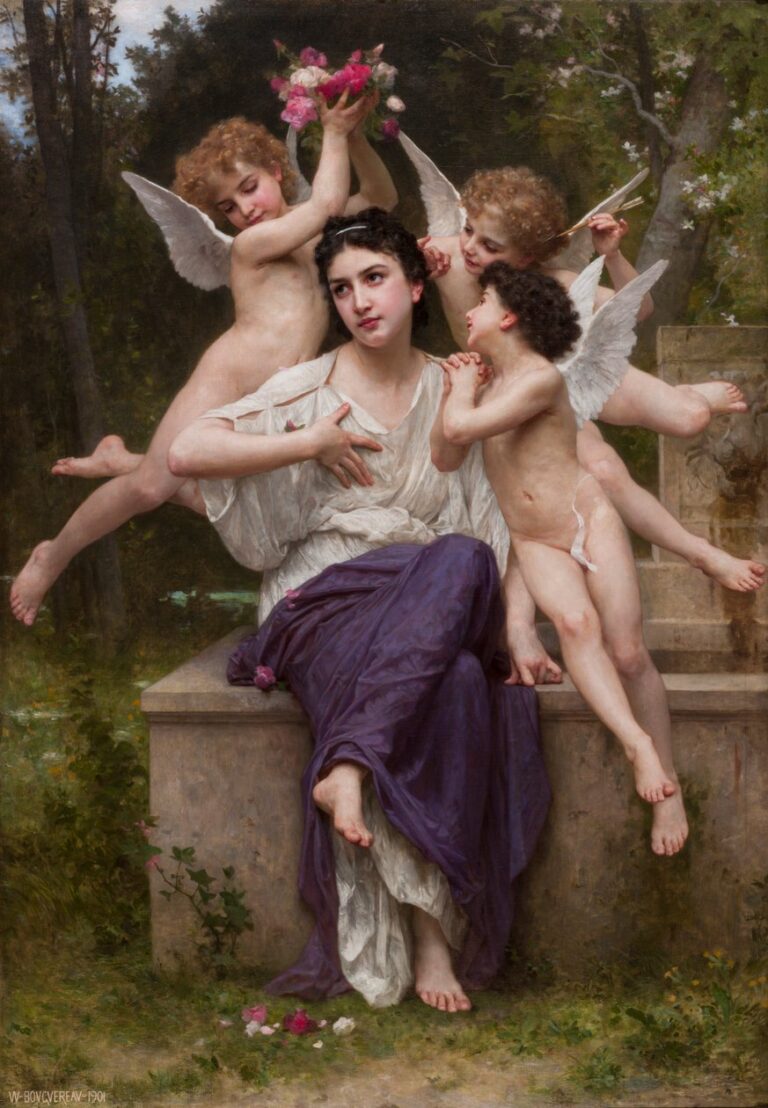
- William-Adolphe Bouguereau (1825-1905)
- John Everett Millais (1829-1896)
- Frederic Leighton (1830-1896)
- Vasilij Grigor’evič Perov (1834-1882)
- Edward Poynter (1836-1919)
- Ivan Nikolaevič Kramskoj (1837-1887)
- Henryk Siemiradzki (1842-1902)
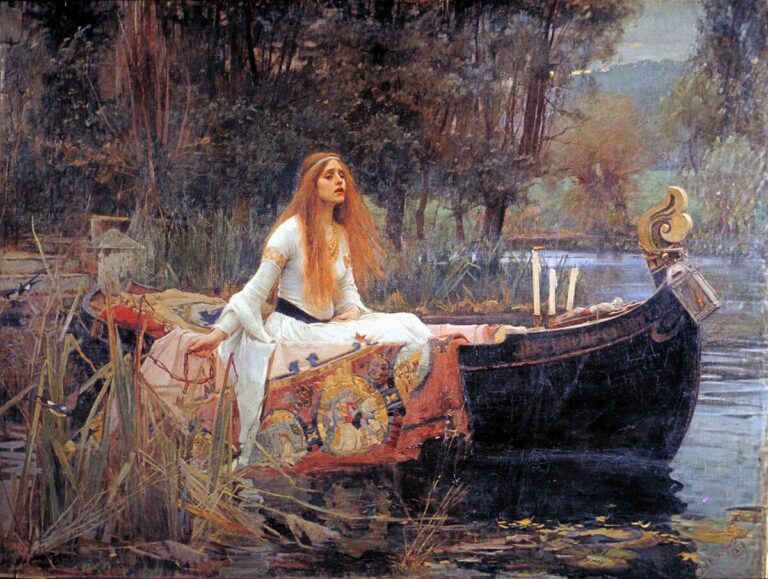
- John William Waterhouse (1849-1917)
Let’s open any standard art history textbook… where are these artists? Why have they been overshadowed?
Let’s look at some of their works, one painting for each artist, following the list in chronological order:
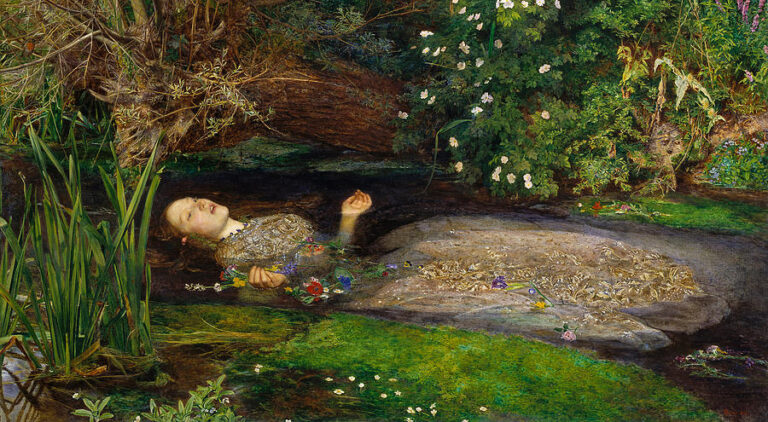
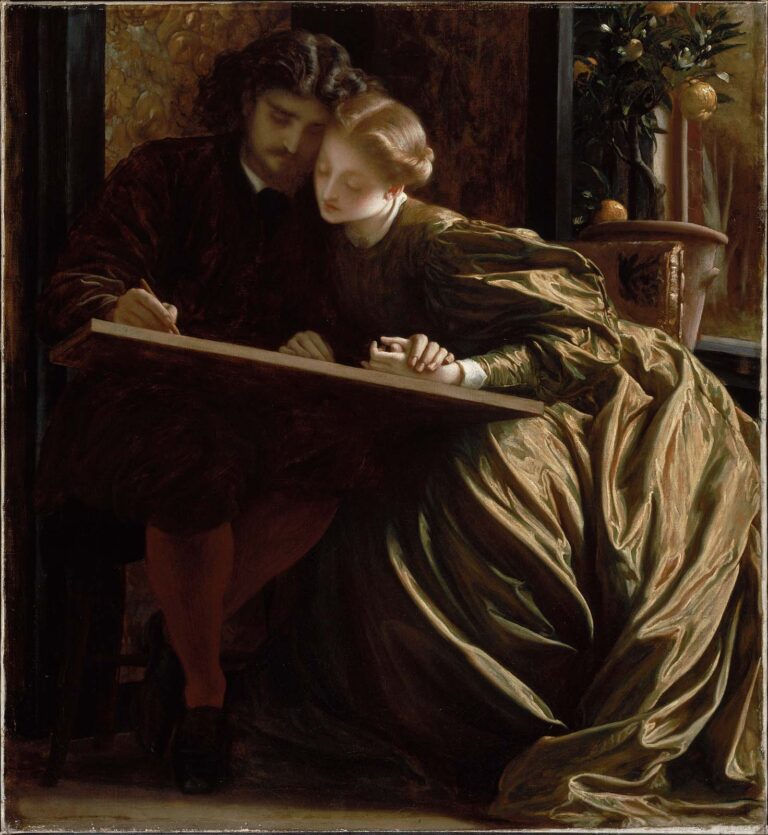

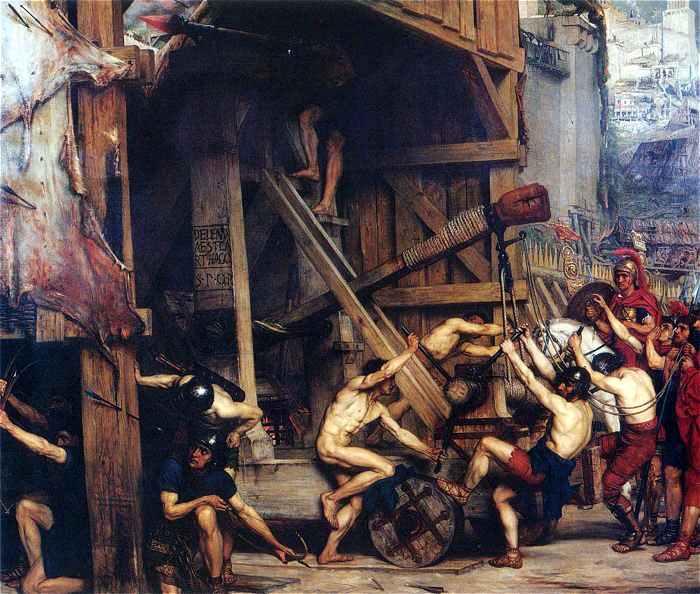
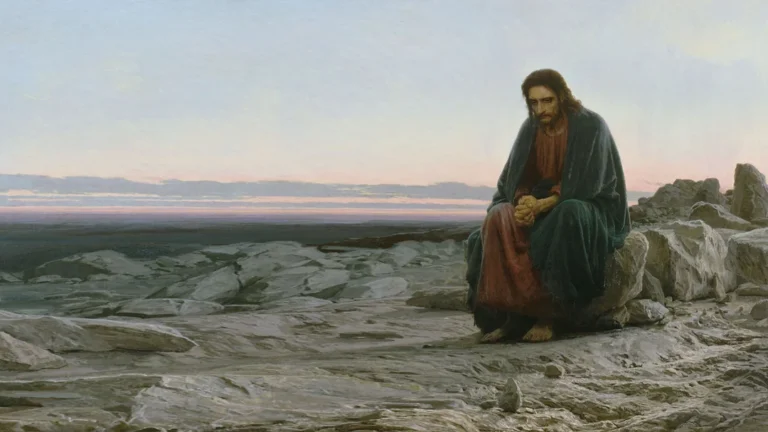

THE STIGMATIZATION OF MODERN ARTS
Opposing the great international banking families who sponsored the modern arts, always leads to enormous difficulties for those who find themselves against them; when possible, it is always better to seek collaboration with them, but if that is not possible, one can do nothing but resist their financial pressure until one yields. Indeed, between one injection of money and another, the profit faction naturally won, equipped with infinite resources and the artificial bubble that gave visibility to the rebels of the Fine Arts inflated, inflated and overlapped with the Academic Arts, making the new ones appear as the champions of the Arts and cultural progress.
At least until today, as we are beginning to notice a return to tradition and a great public rejection of modern arts, completely uninterested in such productions.
This means that there was no real natural change in direction as art history implies, as the Academic Arts were simply obscured and replaced by much greater financial powers, driven by the immense profits of ruthless industrialism. It was not a general change of course, namely a stylistic evolution on which the artistic world agreed, but a propagandistic media substitution.
As I explain in the book “The Great Cultural Battle”, after enriching ourselves with the millennial Western artistic heritage, aware of the great art of the past, we will see the 1900s in a completely different way, and the explanations given by contemporary art historians will seem phony and extremely incoherent; after tasting good dishes, indeed… the palate refines, and poor-quality food is avoided.
How did it all begin?The cultural issues we are addressing arose after the Impressionist movement; if artistic research had stopped there and been integrated into the heritage of tradition, we would all surely have benefited. Unfortunately, a poisonous idea was grafted onto it, namely the concept of “continuous progress” applied to every sphere of human endeavor.
Modern arts are indeed based on the concept of the artistic “continuous progress” (as if lowering standards could be labeled as progress) up to the overcoming of retinism itself (namely, the overcoming of aesthetics, what the eye sees) to reach something that goes beyond the art of the past, namely “Conceptualism.“
What is meant by these terms?
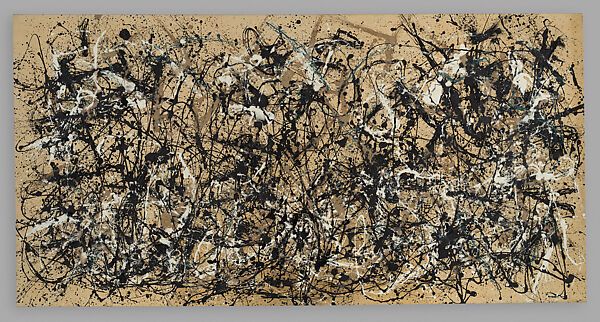
The logic of the arts of progress
To provide practical examples according to their narrative and the “logic” of focusing on specifics while avoiding the whole, Jackson Pollock (1912-1956) brought progress to the arts because he “freed himself” from the brush and painted directly by dripping paint from cans; how can we classify the arts with such nonsensical comparison methods that seek to reduce artistic discourse to minor details, ignoring the overall structure?
Marcel Duchamp (1887-1968), on the other hand, “freed himself” from the characteristic of the artist having to “create artworks” to be considered an artist, establishing the concept of the “Ready-Made“ (Found Object) and conceptual anti-retinalism.
The first concept, Ready-Made, was based on the idea that an artist could take any ordinary object and thanks to their “omnipotent” artistic sensibility, transform it into a full-fledged masterpiece, overturning traditional values. From this moment, according to the Ready-Made theory, it was no longer the artist’s work that mattered, but the artist themselves; they acquired the right to turn anything into art simply by proclaiming it so… to the point that Duchamp himself went to buy a urinal, rotated it ninety degrees, signed it, and titled it “Fountain“.
By “Conceptual anti-retinalism” we mean the overcoming of the academic concept of “Mimesis“, that is “imitating nature“, thus moving toward an art that disconnects from visual data, going beyond it to reach the “concept itself“; pure intellectualism no longer limited by the physicality of the work. Nonsense born from relativist thought, which today allows a man to self-identify as an elephant, even if he feels so for just five minutes.
Can you imagine if surgeons had undertaken a similar technical revolution, starting to randomly cut up patients because surgical “rules” must be surpassed?
After proper academic training, one begins to become immune to these follies and sees them clearly.
Countering Their Dialectic
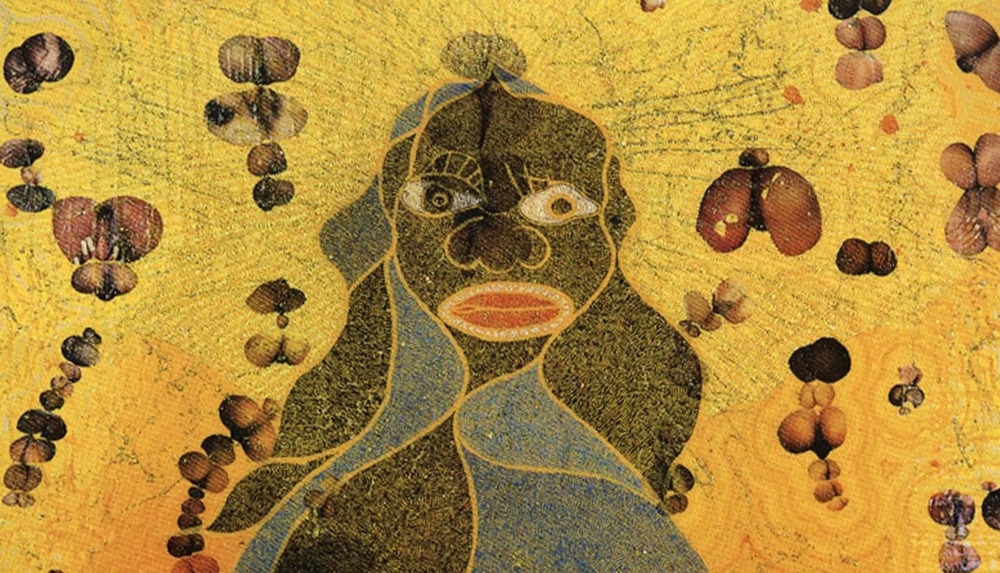
It is crucial to learn observing today’s artworks for what they truly are, after acquiring adequate cultural preparation, to identify their flaws and understand what makes them so toxic to the human mind and harmful to society. This enables the conscious creation of something entirely opposite and thus beneficial to people.
The artwork above is Maria, the Mother of Jesus, smeared with elephant excrements and with pornographic images in the background, glued using the collage technique. Do you think this is a nice artwork?
Modern art thrives on scandal and degradation, representing only what is blasphemous, offensive, subversive and devoid of any theological or existential value. The moment it tries to embrace traditional methods, it signs its own death warrant, as it would begin to become beneficial, requiring the artist to undergo spiritual growth to create it. The subject matter would become deeper and more analytical, increasingly raising the consciousness of viewers rather than lowering it.
Bringing the Fine Arts back into fashion and demonstrating their fundamental and effective role, useful for society, mental development, moral growth and inner enrichment, is the goal of the new Century.
THE TYPICAL MODERN PAINTING AND THE ALTERNATIVE
If we were to analyze a typical contemporary painting, we would notice that the commonly represented themes include: alternative sexuality, spiritualism, nihilistic hedonism, alienation as a value, substance abuse, blasphemy or in any case the normalization of various forms of degeneration; these are the usual messages conveyed.
The artistic technique would likely be banal and amateurish, with garish colors, incorrect proportions and no knowledge of the basics of drawing or pictorial composition. When good technique is present, the message is usually less disturbing because the artist must reflect deeply to create the artwork. This leads an honest artist to embark on a path of spiritual growth, gradually improving the positivity of the message or depicting those themes from a critically aware perspective.
This is why technique is often lacking, and the artist is unable to effectively represent a theme; the spotlight is given to artists who are less threatening to the System, as those who delve into technique tend to reflect, which is not conducive to spreading certain propaganda. Indeed, those interested in technique often end up rejecting modern themes altogether.
What could be an effective alternative to artworks that positively depict evil?
For example, the same scenes could be portrayed realistically and effectively from a critical perspective on evil, showing positive solutions to tragedy rather than celebrating it as a value.
Depicting the paradoxes of modern habits is one response, stigmatizing or ridiculing them. Showing the characters of the artwork becoming aware of their existential condition and seeking a way out allows viewers to see themselves reflected, encouraging thoughts of self-improvement.
Today’s art must show the way out of Plato’s Cave.
The viewer observing the artwork will see the same scene in a very different light, positively reframed compared to the modern artist’s depiction. They will begin to understand that normalizing nihilism is unhealthy; they will start to stigmatize such attitudes and a seed of Truth will be planted deep within them. A spark of awareness will be ignited, striking at the foundations of the wicked system.
An alternative would be to depict the ideal world, such as the eternal concepts of Strength, Paradise, Victory, values tied to the Divine and Eternal Beauty. This depends on the artist’s inclination, who may be more suited to portraying an ideal world or critiquing the reality of daily life.
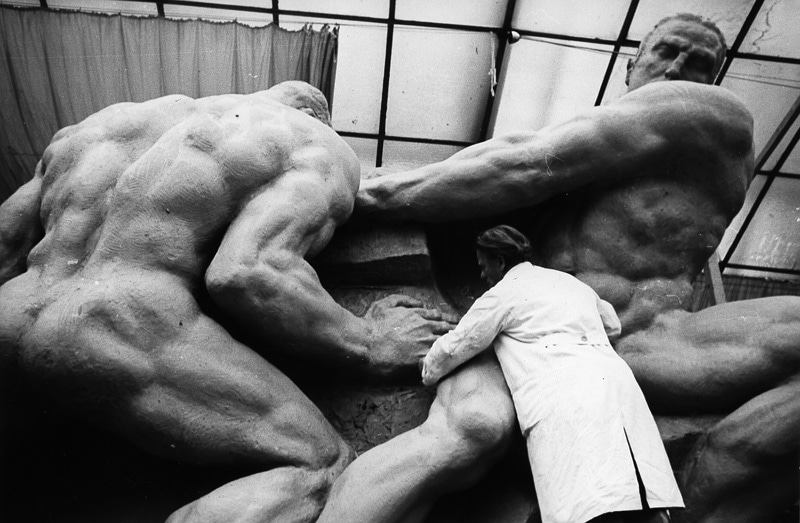
Giving Existential Value to This Battle, with the Aim of Reshaping Society
Being ready to make personal sacrifices for this battle is necessary, so as to understand that it is a struggle that goes beyond personal gain, but rather seeks to safeguard the very concepts of Truth and Beauty, for the salvation of the Common Good.
Life on this planet is in any case temporary and is nothing more than a test from Above, an examination that challenges our inner and outer strengths, with the purpose of purifying us and enabling us to do as much good as possible on this Earth, ignoring the profit gained with a guilty conscience, which comes at a higher price paid when least expected. Isn’t it worth fighting for a just cause?
Considering that those born in the West often have a complex past, steeped in family issues and constant exposure to normalized degeneration… the very fact that we are here, trying to repair the mire in which we were raised… is in itself a miracle.
How many of us have had to deal with family exposure to drugs, libertinism, psychological and physical violence, atheism filled with hatred and negativity, degeneration?… and yet, here we are, striving to cleanse ourselves of the burden of modernism, in an attempt to rebuild a healthy and just society that has been lost.
The battle for the preservation of the Arts, which can repair and heal Western society, is a personal battle that touches everyone sooner or later; we understand this when we hear of tragedies, when we see crime and injustice before our eyes, when we sense that our civilization is on the brink of falling into the abyss of madness.
Our generation is the one that has seen, more than others, the consequences of a modern lifestyle, coming from broken families, exposed to the effects of alcoholism and drug addiction. We were born and raised amidst the fruits of late modernism; it is time to heal this system and rebuild a positive and thriving society.
Those who have chosen to study and create art in these dark, profit-driven times surely did not do so for financial gain, but with a conviction rooted in a sense of justice, following the ancient golden thread of knowledge.
Building the Restoration of the West is possible today.
Scan the QR code to donate:


For donations, contributions, collaborations, purchases, and events, use the form below.