Biography
A contemporary artist who challenges the established avantgardes of the last century
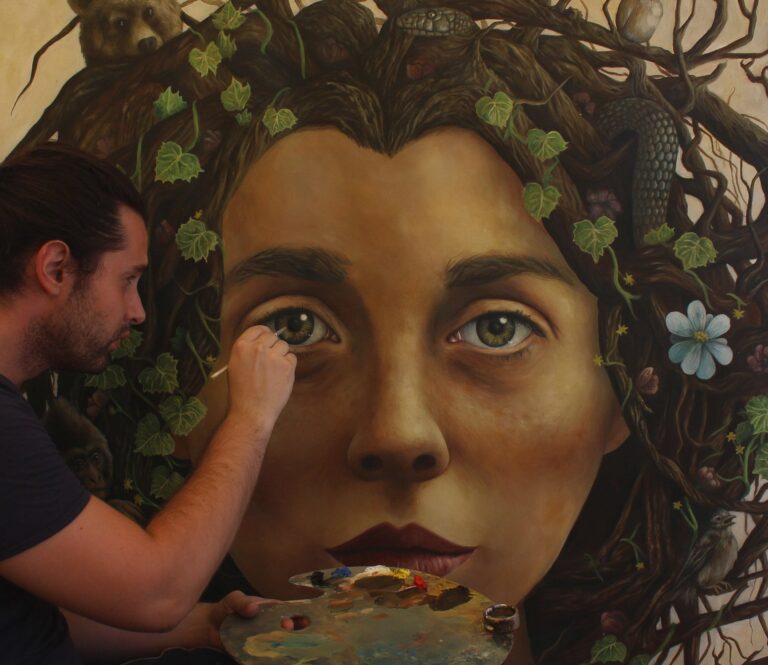
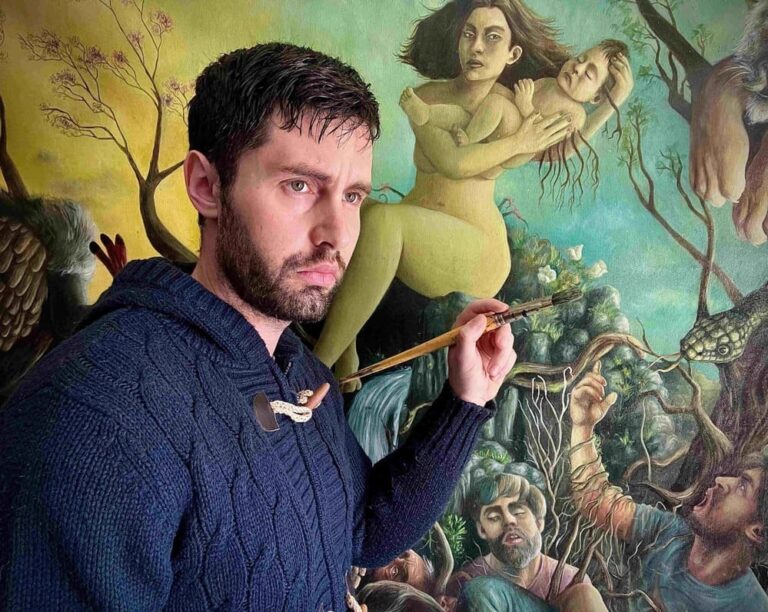
Enrico Ibrahim Deiana was born in February 1993 in Nuoro, a city in central Sardinia, an island of the Italian state. Gifted with a remarkable talent for drawing from a young age, he enjoyed copying artworks and sketching people in his free time, winning several awards in local art competitions during his adolescence; he graduated from the “Fabrizio de André” Art High School in Olbia, attending the Tempio Pausania branch for one year, where he received excellent academic training.
After obtaining his high school diploma, in the summer of 2012, he decided to pursue his great dream of studying figurative arts in the magnificent city of art, symbol of Italy, completing his academic studies in Fine Arts in 2019 at the prestigious Academy of Fine Arts of Florence, where he earned:
- Bachelor’s degree in “Painting and Visual Arts” (2012-2016); thesis titled “Anatomy and Nude”. For his thesis, he conducted in-depth research on academic figurative drawing and artistic anatomy, producing, in addition to the written work, a series of life-sized, realistic, and detailed drawings and oil paintings of young and elderly models in comparison.
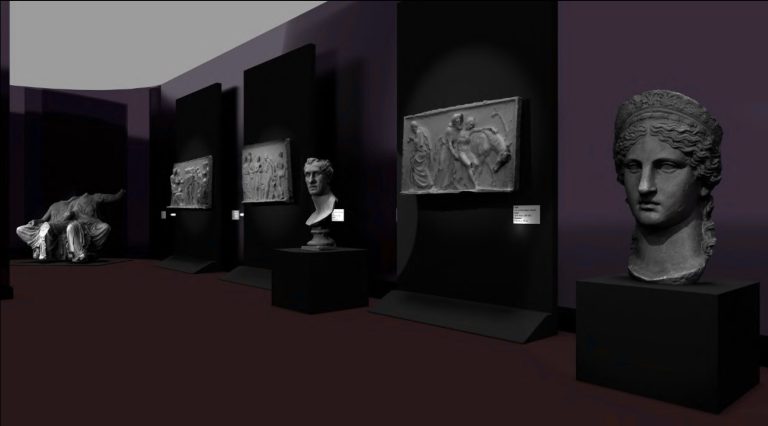
- Master’s degree in “Design and Curation of Art Exhibitions” (2016-2019); thesis titled “Virtual Exhibitions: The Academy’s Collection”. For his thesis, he developed an art exhibition in a three-dimensional virtual gallery, using innovative 3D software and a wearable virtual reality headset, allowing viewers to admire the prestigious collection of plaster sculptures from the Academy as if they were standing in front of them.
In the immortal city of art, Florence, Enrico had the privilege of studying various artistic techniques at the Academy and with private art masters, enriching himself also through the knowledge gained from the multiculturalism of the numerous foreign students in the city. Thus, he acquired an unorthodox conception of drawing and painting methods, both academic and modern, extremely broad and flexible; he spent countless hours copying classical masterpieces of art history or drawing live in front of marble sculptures, researching ancient, valuable information in books written centuries ago, now increasingly forgotten.
During his first year at the Academy, he participated in a collective student exhibition, presenting an oil painting that already hinted at his future path (photo below).
He also diligently studied the history of modern art, seeking to understand the reasons behind the complete overturning of artistic values and styles that occurred during the 20th century, taking what was good and useful from these avant-gardes and developing an ideological and political conception to grasp what lies behind these major cultural shifts.
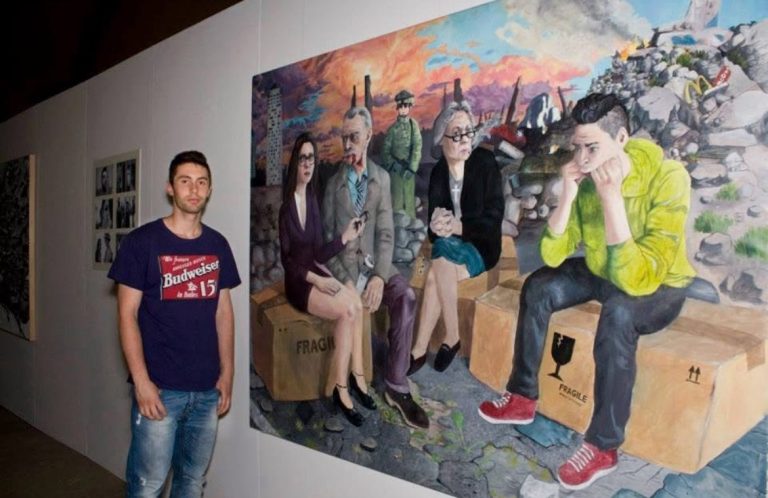
During his academic years, Enrico experimented with various artistic techniques, gaining technical and expressive mastery in different fields, such as: oil painting, watercolor, egg tempera, fresco, drypoint and linoleum engraving, clay sculpture and plaster casting; he also studied digital techniques such as 2D illustration, 2D/3D animation, realistic modeling, and 3D rendering, through which he explored realistic holographic projections and virtual reality immersions, which he later incorporated into his master’s thesis. In 2016, he undertook a significant internship compatible with his digital graphics studies started as artistic experiment, working on “advanced 3D facial modeling and animation for facial expressions” at “Mimic Production” in Berlin.
Among the themes he explored most deeply within the academic method were Charles Bargue’s exercises, Russian constructive drawing, composition and visual balance, color theory, figurative anatomy, physiognomy, symbolism, and iconography, as well as artists’ diaries and treatises. He also delved into modern experiments related to contemporary arts, such as modern studies on visual perception, Impressionist and Expressionist figurative techniques, conceptualism and theories of modern and contemporary art, from which he drew inspiration to create a bridge between tradition and contemporaneity.
While pursuing his studies at the Academy of Fine Arts of Florence, he had already been teaching privately for several years, sharing what he had learned as a self-taught artist. From 2017, he officially became an art professor at the Accademia del Giglio in Florence, a hub for countless art-loving students of all nationalities.
After completing his master’s degree in 2019, he gained experience as a theatrical set designer, a role that allowed him to pragmatically and directly consolidate the knowledge he had acquired, setting up stages for evening performances; he was then hired as an art professor at the International Art High School in Guangzhou, China, and subsequently continued teaching privately and at schools and educational associations.
Initially, he had no interest in presenting himself as a figurative artist, preferring to focus solely on teaching art, as he obsessively sought to mature his artistic vision, firmly believing that one should only exhibit publicly when there is something fundamentally necessary to share, and not before, thus refraining from promotional opportunities.
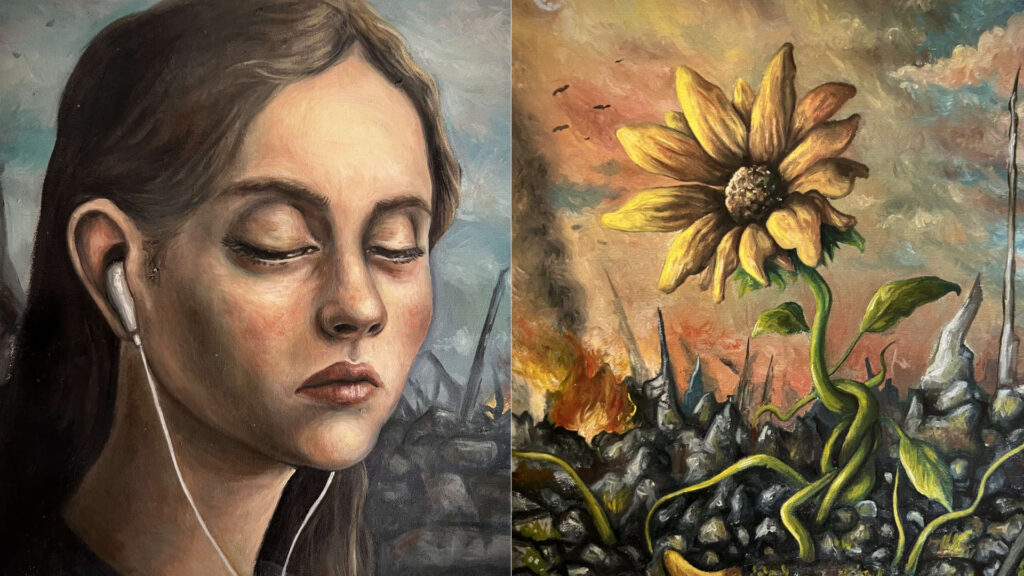
After many years of deep reflection, diligent study, and experimentation on what was worth communicating through art and what was not, he concluded that he was ready to begin sharing his creations; in times of such turmoil and tragedy, Enrico continues to develop an artistic language that allows him to effectively describe contemporary society, engaging with it through images that are sometimes provocative, sometimes satirical, sometimes dramatic or hopeful, but always aimed at diverting attention from the dominant secular narrative and the omnipresent propaganda bubble.
Through his art, in its small way, he tries contributing to expanding individuals’ consciousness; his goal is to present a radically different perspective from the prevailing one in the West, injecting poetry, transcendence, presumed offense or dystopian horror, depending on the work and the message he intends to convey.
Behind his controversial and unusual images, at a deeper level of interpretation, there is a coded message of existentialist and philosophical depth, rather than the usual attempt to produce commercial art compatible with today’s demands for promoting degradation, anti-morality, and superficial content…easily sellable but devoid of any ethical value.
Enrico aligns art with existentialist philosophy and prefers the arduous path that leads to true long-term gratification, rather than the sacrilege of turning art into a trivial and superfluous commercial product.
His investigative work draws on the visual and symbolic heritage of past Western traditional culture, without neglecting interesting modern experiments, with the aim of creating a reconciliation between tradition and modernity, in direct contrast to the modernist ideology that seeks to annihilate the heritage of the past in the name of the infamous and now questionable “cultural progress”, which is not evident in the fruits this society produces.
His artistic philosophy
He consciously rejects the break with the past promoted by the anarchist DADA movement, which in 1916 in Zurich defined the ideology of the avant-gardes still operating today, now consolidated as “Official Art” and branching out into every cultural sphere that promotes indifference and rejection of tradition, the celebration of scandal and moral degradation, namely the so-called “values” of modernity.
He questions whether the deliberate severance of ties with our past has been somehow exploited and ridden by entities that now use art to convey political messages aimed at socially engineering Western civilization, with the purpose of shaping nihilistic and weak individuals, easy to control and influence; a rebellious avant-garde that became “Official Art”, which today seems to hinder anyone attempting to rediscover the tradition of the past, labeling them as an “ignorant anachronist.”
Enrico aims to dismantle this ideological wall that prevents the Fine Arts from once again guiding mass culture and argues that the only solution to heal the fragmented social fabric is to create a pragmatic compromise between the pre-Impressionist past and the post-Dadaist present, recovering the heritage of artistic tradition and contemporary conceptual/existential research, with the aim of addressing today’s society, transforming the destructive negativity of modernity into an ally of tradition.
His artistic work seeks to build a bridge with the past, reviving a cultural heritage that today seems to no longer exist, and then applying it in a technically and coherently manner, thus tackling the issues of today’s liquid and relativistic society; a society in free fall, in continuous decline, understandable only when observed from an external perspective, outside the bubble of modern propaganda that engulfs its citizens.
An imminent collapse can already be sensed, unless ancient principles are restored.
In this attempt to revive the dormant past, he does not retreat anachronistically but moves forward, proposing an alternative path to that of the avant-gardes, which promote everything but the Beautiful and the Just, so that art may once again be clothed in its regal garments, recovering its dignity and its meaning as a pursuit of an immortal Truth, rescuing it from the cultural decay in which it is currently left to drown.
In addition to being a figurative artist, as previously mentioned, he has taught in various institutions, both in Italy and abroad, and continues to guide a private group of students dedicated to the practical study of artistic techniques, as public institutions increasingly show a degradation in teaching on this subject, and most art students require a sort of “academic drawing therapy” to recover from the poor teachings learned at school.